
Introduction
The modern laptop market is entering a new era. For years, premium computing has been dominated by sleek devices Read More focused on speed, portability, and ecosystem integration. But artificial intelligence is changing the rules completely. Today, consumers are no longer asking only about battery life, display quality, or processor speed. They want intelligent systems that can assist with productivity, automate workflows, understand context, and function like a real digital assistant.
This shift has opened the door for a new category of AI-first computers.
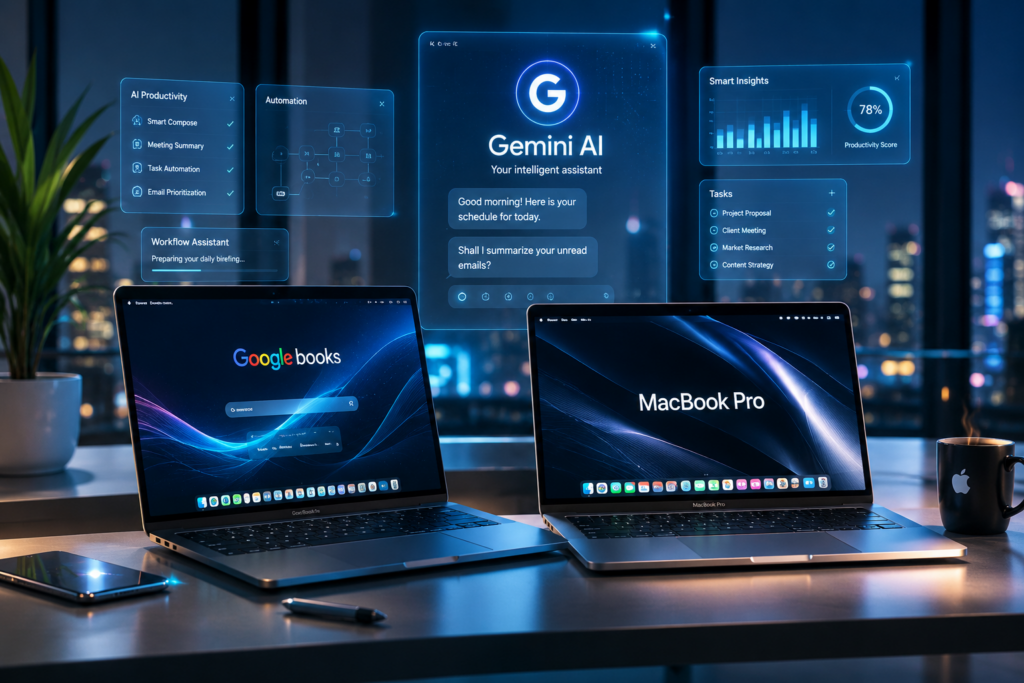
Rumors and growing industry discussions suggest that Google may be preparing a deeper AI-focused computing experience that goes far beyond traditional Chromebooks. Many technology enthusiasts have started referring to this possible concept as “GoogleBooks” — a next-generation AI-powered laptop ecosystem designed around Gemini AI and advanced automation features.
At the same time, Apple’s MacBook lineup continues to dominate the premium laptop market with its powerful hardware, polished software ecosystem, and high-performance Apple Silicon chips.
The real question now is no longer simply Windows vs Mac or ChromeOS vs macOS.
The new competition is becoming:
AI-Native Productivity vs Traditional Premium Computing
In this article, we will explore how a future Google AI-powered laptop ecosystem could compete against Apple’s MacBook lineup, the technologies that may define this rivalry, and what it means for creators, entrepreneurs, remote workers, students, and business professionals.
The Rise of AI-First Computing
Artificial intelligence is rapidly becoming the center of modern computing. Instead of manually searching through apps, organizing tasks, or handling repetitive workflows, users now expect their devices to assist proactively.
AI is no longer just a chatbot inside a browser tab.
It is evolving into:
- Intelligent task automation
- Real-time workflow assistance
- Smart scheduling
- Voice-driven productivity
- Predictive computing
- Personalized operating systems
- AI-generated interfaces
- Context-aware recommendations
Traditional laptops were designed around applications.
The next generation of laptops may be designed around intelligence itself.
This is where Google could have a major advantage.
What Exactly Is “GoogleBooks”?
The term “Googlebooks” is not currently an official Google product category, but it represents an emerging idea: a laptop ecosystem deeply integrated with Google Gemini AI.
Instead of functioning like a standard Chromebook, a Googlebook-style device could become an AI companion that understands user behavior, predicts workflows, and automates digital tasks in real time.
Imagine opening your laptop and the system already knows:
- Your meetings for the day
- The documents you need
- Emails requiring urgent replies
- Research topics you are working on
- Your content calendar
- Your business priorities
- Your preferred writing style
- Your most-used tools and workflows
Rather than launching separate apps manually, the AI system could orchestrate everything for you.
This would represent a major transition from reactive computing to proactive computing.
Why Google Has a Strong AI Advantage
Google already owns one of the largest AI ecosystems in the world.
The company controls:
- Search
- Gmail
- YouTube
- Google Drive
- Android
- Google Docs
- Google Photos
- Maps
- Gemini AI
- Google Workspace
- Chrome Browser
Because these services already collect workflow context across billions of users, Google is uniquely positioned to create highly personalized AI computing experiences.
A future AI-first laptop ecosystem could unify all these tools into one intelligent environment.
For example:
A user receives an email about a meeting.
The AI instantly:
- Detects the date
- Suggests calendar scheduling
- Prepares meeting notes
- Opens related documents
- Creates reminders
- Summarizes previous conversations
- Generates task lists automatically
This level of workflow integration could fundamentally change how people interact with computers.
MacBook Still Dominates Premium Computing
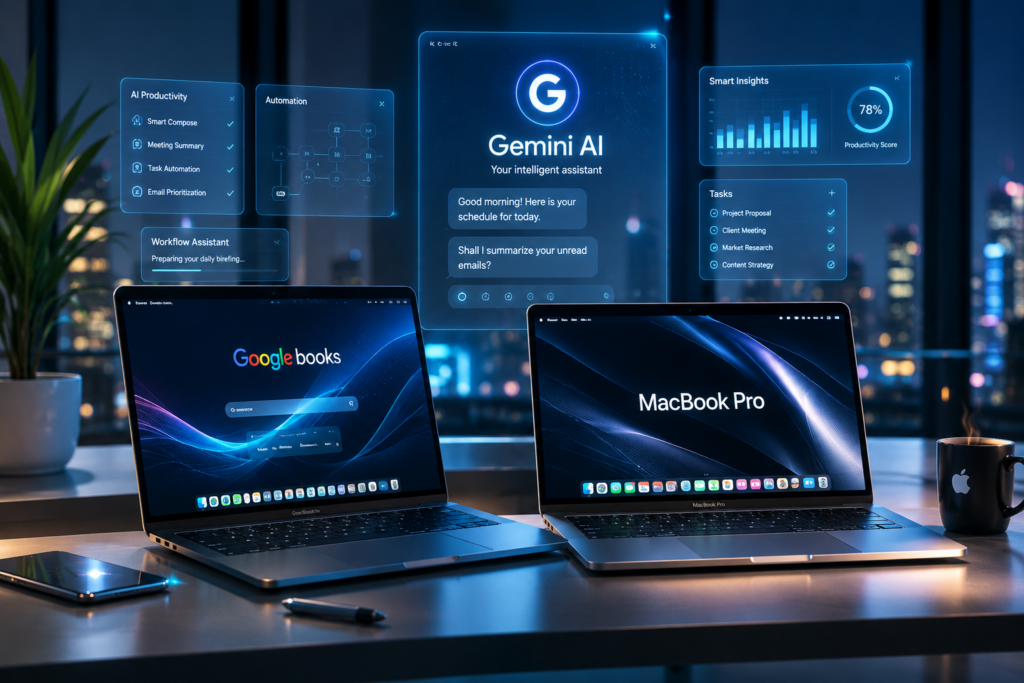
Despite the growing AI wave, Apple’s MacBook remains one of the most refined laptops ever created.
Apple’s strengths are difficult to ignore.
1. Hardware Optimization
Apple controls both hardware and software, allowing macOS to work seamlessly with Apple Silicon chips.
This results in:
- Exceptional battery life
- Silent performance
- High efficiency
- Advanced thermal management
- Fast rendering speeds
- Reliable long-term performance
For creators and professionals, this consistency matters greatly.
2. Ecosystem Integration
MacBooks connect deeply with:
- iPhones
- iPads
- Apple Watch
- AirPods
- iCloud
- Final Cut Pro
- Logic Pro
Features like:
- AirDrop
- Universal Clipboard
- Handoff
- iMessage sync
- iPhone mirroring
make Apple’s ecosystem extremely convenient.
This is one reason many professionals remain loyal to MacBooks.
3. Creative Industry Dominance
MacBooks are heavily used by:
- Video editors
- Designers
- Developers
- Photographers
- Music producers
- Entrepreneurs
- Data analysts
- Digital agencies
Apple has built strong trust among creative professionals.
The challenge for Google would be convincing premium users that AI-centered productivity can outperform Apple’s polished ecosystem.
How AI Could Become Google’s Secret Weapon
Apple focuses heavily on hardware quality.
Google could focus heavily on intelligence.
That distinction matters.
A future GoogleBooks may not need the most powerful hardware if the AI can dramatically reduce manual effort.
For example:
Instead of manually:
- Searching files
- Opening tabs
- Organizing folders
- Scheduling meetings
- Creating reports
- Writing emails
the AI assistant could handle most of these automatically.
This transforms the laptop from a passive machine into an active collaborator.
The Era of Contextual Computing
One of the biggest shifts in AI computing is contextual awareness.
Traditional computers wait for instructions.
AI-native systems anticipate needs.
Imagine typing:
“Prepare my weekly business report.”
The AI could:
- Gather analytics
- Summarize sales data
- Generate charts
- Draft insights
- Build presentation slides
- Recommend strategic actions
without requiring separate software navigation.
This is the future many AI companies are racing toward.

Could Google Replace Traditional Apps With AI Workflows?
One of the most disruptive possibilities is that AI may eventually replace the need for traditional app-based computing.
Instead of opening:
- Word processors
- Spreadsheet apps
- Calendar apps
- Email apps
users may simply communicate with AI directly.
For example:
“Create a financial projection spreadsheet for my startup.”
The AI generates it instantly.
Or:
“Summarize all unread business emails and draft replies.”
The system completes the workflow automatically.
This conversational computing model could become the next evolution of personal productivity.
Google is already moving toward this direction with Gemini integrations across Workspace tools.
Android Ecosystem Integration Could Be a Massive Advantage
One major advantage Google has is Android.
Android powers billions of smartphones worldwide.
A Google AI laptop ecosystem could deeply integrate with Android devices in ways that rival Apple’s ecosystem.
Possible features could include:
- Instant app synchronization
- Phone-to-laptop AI continuity
- Smart notification management
- AI-generated phone summaries
- Automatic cross-device workflows
- Shared AI memory across devices
Imagine taking a photo on your Android phone and the laptop AI instantly:
- Edits it
- Organizes it
- Generates captions
- Suggests social media posts
- Uploads it to cloud storage
without manual steps.
That level of automation could attract creators and entrepreneurs significantly.
The “Magic Pointer” Concept
One fascinating concept discussed around AI-first computing is intelligent cursor interaction.
Instead of traditional clicking, future systems may allow contextual hovering.
For example:
- Hover over a date in an email → AI schedules meeting
- Hover over a product image → AI visualizes it in your room
- Hover over a research term → AI summarizes the topic
- Hover over a spreadsheet → AI explains trends automatically
This kind of AI-assisted interface could make computing more intuitive.
Rather than searching through menus, users interact naturally with intelligent overlays.
AI Personalization May Become the New Operating System
Today, operating systems are mostly static.
But AI-native operating systems could become highly personalized.
Your laptop may eventually understand:
- Your profession
- Your workflow habits
- Your writing style
- Your business goals
- Your preferred software
- Your daily schedule
This would create personalized productivity environments unique to every user.
Two people using identical laptops may experience entirely different AI-generated interfaces optimized for their needs.

Can Google Compete With Apple’s Premium Design?
One challenge Google may face is hardware identity.
Apple has built a premium image around:
- Minimalism
- Build quality
- Materials
- Industrial design
- Brand prestige
Google would likely need strong partnerships with manufacturers like:
- HP
- ASUS
- Dell
- Lenovo
- Acer
to create AI-focused premium hardware.
The company would need laptops that feel:
- Elegant
- Durable
- Fast
- Professional
- Premium
because AI alone cannot compensate for poor physical design.
Consumers still care about:
- Keyboard comfort
- Display quality
- Portability
- Thermal performance
- Battery life
A successful Googlebook ecosystem would need both intelligence and premium engineering.
The Battle Between Simplicity and Intelligence
Apple traditionally emphasizes simplicity.
Google may emphasize intelligence and automation.
This creates an interesting market contrast.
MacBook Experience
- Stable
- Minimalist
- Elegant
- Performance-focused
- Hardware-driven
Googlebook AI Experience
- Adaptive
- Personalized
- Predictive
- AI-centered
- Workflow-driven
Different users may prefer different philosophies.
How This Impacts Business Professionals
AI-native laptops could dramatically improve productivity for:
- Remote workers
- Entrepreneurs
- Freelancers
- Analysts
- Researchers
- Content creators
- Agencies
- Students
Imagine reducing:
- Email workload
- Administrative tasks
- File organization
- Scheduling friction
- Research time
by 50% through AI automation.
That productivity advantage could become more valuable than raw processing power.
Data Privacy Will Become a Major Concern
As AI systems become more personalized, privacy concerns will intensify.
Users may worry about:
- Data collection
- Behavioral tracking
- AI memory systems
- Cloud synchronization
- Personalized monitoring
Apple already markets itself heavily around privacy.
Google would likely face tougher scrutiny due to its advertising business model.
This could become one of the defining battlegrounds in the AI laptop war.
The Future of Human-AI Collaboration
The most important shift is not simply faster laptops.
It is deeper collaboration between humans and AI systems.
Future laptops may act more like:
- Digital coworkers
- Executive assistants
- Research analysts
- Content strategists
- Workflow managers
rather than simple machines.
Users may spend less time operating software and more time directing AI systems strategically.
That fundamentally changes the role of computing itself.
Could AI Replace Traditional Desktop Interfaces?
One radical possibility is the disappearance of traditional desktop environments entirely.
Instead of folders and icons, future systems may revolve around:
- Conversations
- Smart dashboards
- Predictive actions
- Contextual recommendations
- AI-generated workflows
The interface itself could become fluid and adaptive.
This would be one of the biggest transformations in computing history.
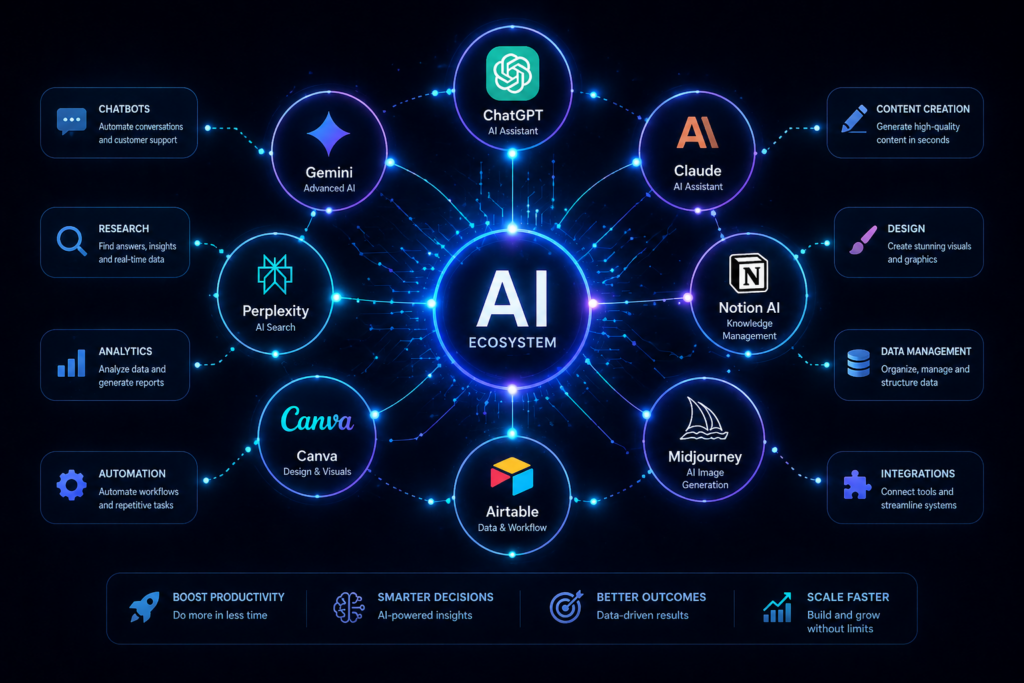
Who Would Win the AI Laptop War?
The answer depends on what users value most.
MacBook May Continue Leading In:
- Premium hardware
- Creative performance
- Stability
- Design
- Professional editing
- Ecosystem loyalty
Google AI Laptops Could Lead In:
- Workflow automation
- AI integration
- Personalized productivity
- Smart assistance
- Context-aware computing
- Cross-platform intelligence
The future market may not produce a single winner.
Instead, users may choose between:
- Performance-centric computing
or - AI-centric computing
Final Thoughts
The next era of computing won’t be defined by processor speeds or display resolutions — it will be defined by intelligence. Raw hardware is becoming a commodity. What separates the leaders from the rest is how seamlessly they weave AI into the fabric of everyday work.
Apple holds a clear advantage today, built on decades of earned trust and an ecosystem that feels cohesive rather than cobbled together. Google, meanwhile, is quietly positioning itself to lead in something more ambitious: computing that understands context, anticipates needs, and acts before you ask.
If that vision plays out, the laptop of the future won’t feel like a device you operate. It will feel like a collaborator you work with — one that learns your habits, fills your gaps, and keeps pace with how you actually think.
The real shift, then, isn’t about making computers faster.
It’s about making them smarter than fast — present enough to understand you, capable enough to assist you, and intuitive enough to stay out of your way.

“AI enthusiast and Digital entrepreneur dedicated to helping others Leverage Technology for Financial Freedom”.
As an Amazon Associate, I earn from qualifying purchases.
`